How to start Wild Camping
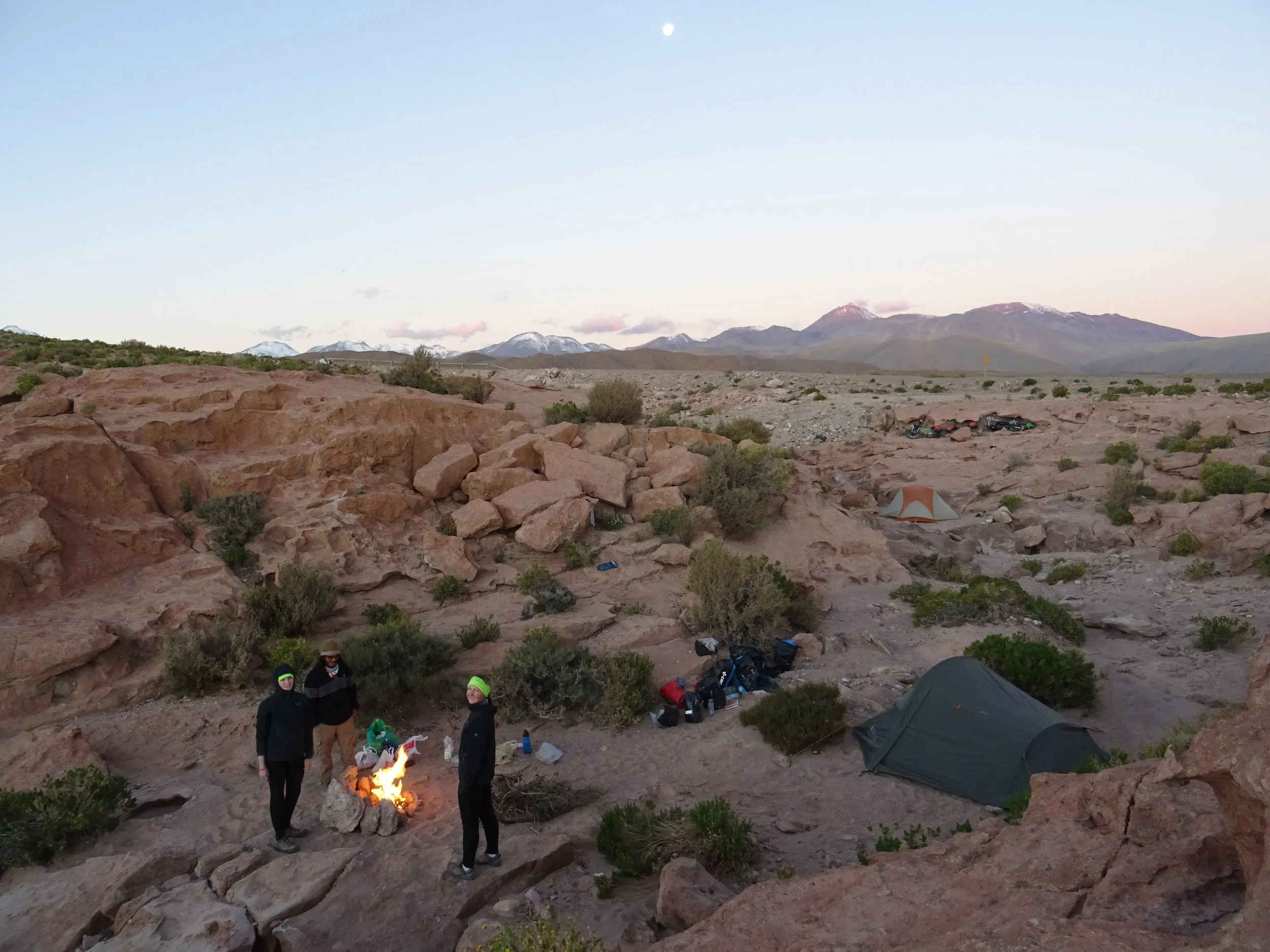
Bikepacking in Northern Chile
Sleeping in a tent in the middle of a seemingly boundless landscape, with nothing around but some distant mountaintop and local wildlife, is a great feeling. To achieve this sense of adventure, you can pay big money for a fancy safari or wild camp for free. Here is how to do the latter.
Wild camping can be wonderfully simple: just you, your tent and the wide-open world. But for beginners, the practical side can feel a bit daunting. Where do you pitch? What counts as a decent spot? How do you sleep well when you just can’t find a perfect spot?
This guide offers lessons that usually come from trial, error and the occasional damp sleeping bag. With a bit of preparation and a level head, wild camping becomes less of a gamble. Scroll all the way down to find my wild camping kit list.
What is wild camping?
Wild camping refers to the act of camping in the wilderness (or simply the countryside), as opposed to in a campsite or someone’s garden. National laws on whether and where this is allowed vary (click here for more info), but wild camping is a common practice across the globe.
Wild camping also typically involves staying one or two nights in the same spot rather than pitching up camp for the whole summer.
Finding out where to go
Know the rules, but also know there is usually leeway where camping is not permitted (LINK). In Scotland and Dartmoor, you can pitch pretty much anywhere except for historical sites and people’s gardens. It’s up to you whether you feel comfortable being visible from the road or path. I personally feel better if I am invisible, but it has a downside when travelling alone. If you have an issue, no one will see you and so it may be tougher to get help. I often text someone my location, just for peace of mind.
Choosing a spot
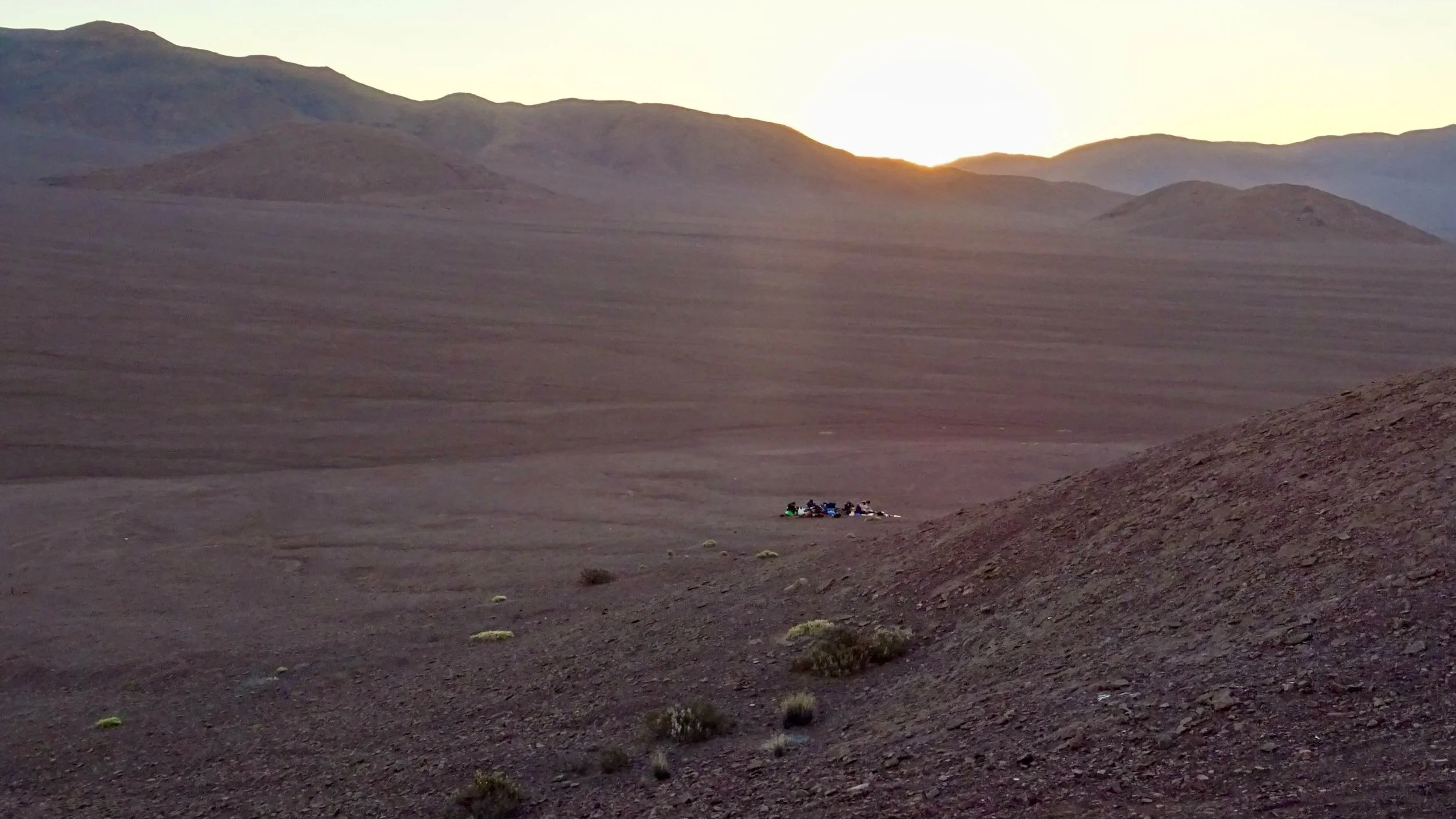
Three bikepackers setting camp in the Atacama desert
The main variables are: wind, damp, surface type, incline. Sometimes, you will find a spot offering shelter and a flat, dry and firm surface free of brambles. Sometimes, you will have to settle for a spot offering only some of these characteristics. Here are some criteria to look out for, in order of priority:
-Dry: Not pitching in mud is obvious. But a dry pitch is one that will stay dry throughout the night. When setting up camp, assume it will rain. You’ll avoid waking up to water slowly soaking the inside of your tent. This is a safety issue in countries subject to flash floods or heavy rain seasons. Pitching by a body of water can be risky: as scenic as it sounds to open up your tent to a close-up view of a river in the morning, it is always best to set up camp some way away from the water line in case the river overflows or the tide comes in. Additionally, moving water can be very loud and stop you from sleeping or give you an unreasonable urge to pee in the middle of the night.
-Flat: Finding a level spot is not always possible, so do your best. If you have to pitch on a slope, position the tent in the same direction so that your head is higher than your feet. A grippy mat will make for more comfortable nights on a slope, as the sleeping bag often slides right down and ends up pressing into the bottom of the tent. This puts tension on the seams of the tent and is likely to make the bottom of the sleeping bag wet. In relation to the previous point, it’s best to pitch higher up on a slope if rain is forecast, as water may pool up at the bottom.
Extra tip: After endless nights outside, I am still terrible at judging the slant and direction of a slope. Before assembling my tent, I generally throw my fly sheet on the ground and lie on it, rotating my body until I find the right position for the tent. If you don’t do this, you may get into the tent you pitched earlier on, only to find out that you misjudged the slope and have two choices: packing up completely and pitching again or having a bad night.
-Wind: Exactly how you pitch in windy conditions depends on the shape of your tent, but a good rule of thumb is to pitch with your head away from the wind. With a tunnel tent that has two parallel supportive arches, make the smaller arch face the wind directly, so that gusts go over and around the tent instead of offering a wide portion of fabric to the wind, resulting in a flapping-sail noise throughout the night, as well as structural issues. With all types of tents, make the lower or narrower side face the wind.
-Surface type: Surface can be either smooth or rough, soft or hard. Short grass is the dream smooth surface. A forest full of brambles or a rocky beach – both rough surfaces – risk puncturing your tent sheet and possibly even your mattress, or just lead to an uncomfortable night. A soft surface is one in which pegs go in easily and hold strong, even if wind tugs at the tent. A hard surface may make it impossible to insert pegs into the ground.
Extra tips: If you have a self-standing tent, you may be able to get away with forgetting about the pegs if the night is dry and wind free. If you fear the elements or have a tunnel tent, use objects as anchors. You can lay your bike or heavy backpack a metre away from the tent and tie guy lines to it if the surface is bad. If there are stones around, you can wedge them over the tent ends, adding weight onto the pegs to keep them in place in soft ground. You can even tie the tent lines around rocks or trees to keep the tent taut when pegs are hopeless.
The case of the hammock
Sleeping in a hammock is a solution to some of the above issues. However, it comes with its own challenges, the main one being having to rely on two trees or poles at the right distance from one another. Every hammock user will remember a time they did not find such a place and had to use their hammock as a makeshift bivvy bag, sleeping on hard ground without a mattress.
Hammocks are great in forests, and necessary in places with dangerous creepy-crawlies (think tropical and equatorial forests), where a tent is not an option.
Best is the enemy of good
My preference is to have beautiful scenery when I camp. However, I also know that finding the perfect camping spot can take time and is not always possible. I have passed up on fine spots in search of the holy grail of scenic views to then only find worse and worse ones as the evening progressed. I once literally pitched up by a dump after a long series of ‘Maybe we’ll find an even better spot’.
I now apply a ‘good enough’ policy. Freeing myself from the fear of missing out on the ultimate spot has helped me be more content, and on average, pitch on nicer spots.
If a spot offers three of the four above characteristics and a half decent view of nearby clean water, then I simply go for it.
Sleeping well
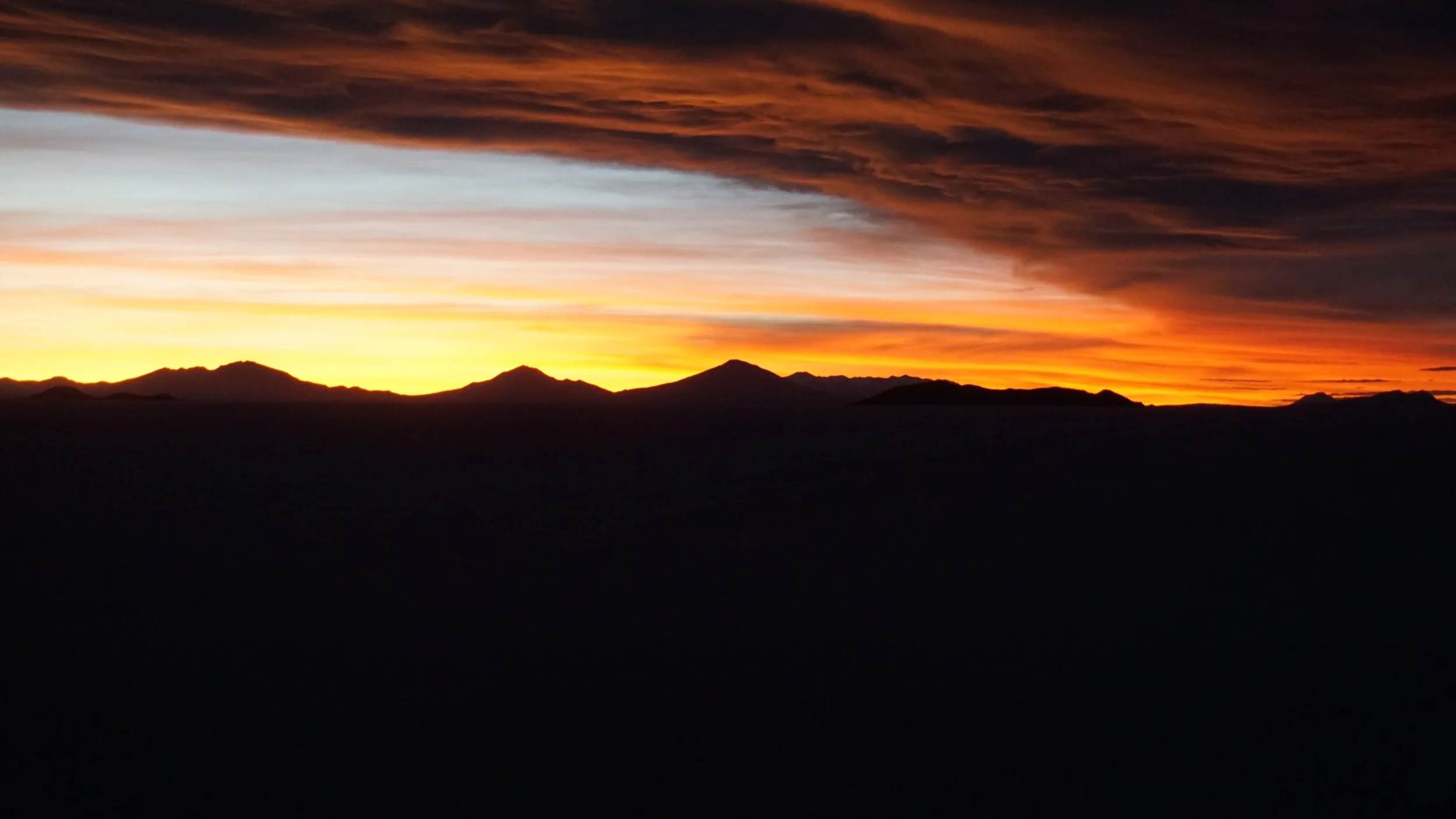
Antonio Quijarro, Bolivia
Sleeping well when wild camping is a combination of habit and good gear. Don’t give up on camping just because you remember one bad night. We all have those at home, too. Instead, focus on quality sleeping kit to keep you cosy in cold weather.
Mattresses are not just useful for comfort, they also constitute a buffer between the cold ground and your body. Some even have insulation built in, which comes in handy in humid and chilly climates.
Find what works for you: I have invested in an inflatable travel pillow. Gone are the days of rolling up some clothes into my sleeping bag cover to then rest my head onto an ever-shapeshifting bulgy mass. I am over thirty, after all. Figure out what makes your nights better and focus on bringing that into your camping routine.
Eating well
Carrying a stove, one or two pots and some condiments will allow you to eat well on a budget. You can buy ready-made dehydrated meals, but in my experience, they are neither tasty nor sufficiently calorific, and are better suited to space-starved adventurers such as climbers.
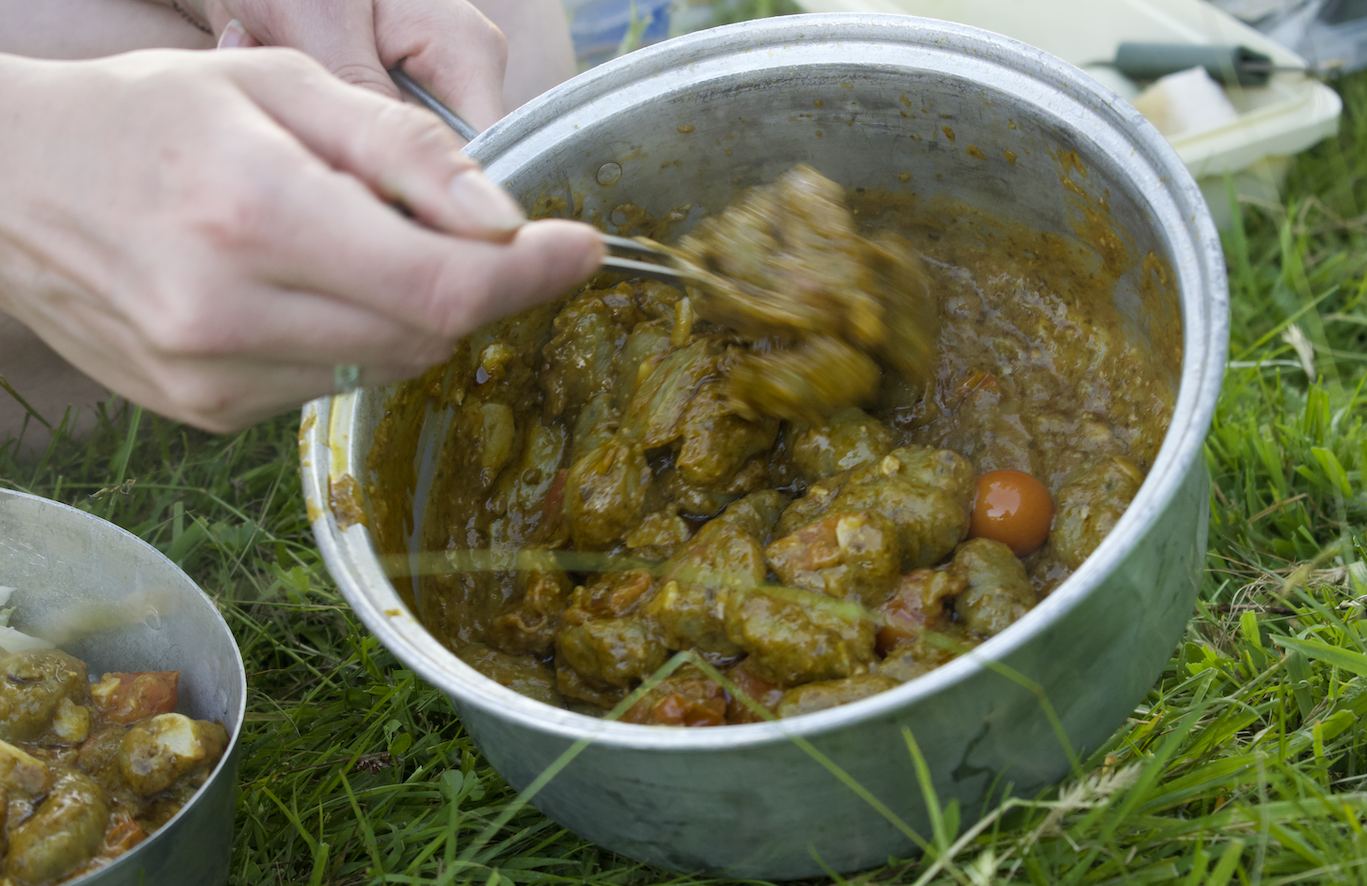
I sometimes travel without a stove. It makes my setup lighter, but as a result, my meals are more monotonous and I am more often tempted to splurge on a restaurant. Couscous has become my best friend on those trips: fine grains can be rehydrated in water within about 30 minutes, and they make a decent meal mixed with chopped veg or dried fruit. It can even be a good breakfast option as a cold Seffa, a North African dish of couscous grains, powdered sugar, cinnamon, nuts and dried fruit.
Access to water
Camping by water is poetic, but it also provides a way to wash and do the dishes. Head to this article for more detail on how to use waterways in a responsible way.
Add a folding wash basin to your gear so that you can take advantage of the local facilities.
In doubt, make sure you have two litres of drinking water on you before looking for a spot, in case you have to use one for cleaning and one for drinking, and hold out till the following day. Carrying a water filter or water purifying tabs is useful in remote areas, but do your homework and figure out what your chosen method is good for.
For example, I drank a lot of contaminated water in Chile. I had assumed that I only needed to filter out bacteria, which my filter bottle did well. I changed my routine when I cycled through endless kilometres of mines and learnt how full of heavy metals the water was.
Knowing your environment
In places where nature is out to get unsuspecting humans, it is sometimes discouraged to hike or camp solo. For example, I have camped countless times in French Guiana, but I am not willing to try it alone: some spider, snake or stingray encounters can send you straight to hospital, and many places in the forest do not have signal. Worse still, the forest is so dense you may have to create a clearing with a machete or drag yourself to a natural clearing for a helicopter to reach you. In such places, the recommendation is to travel in groups of three so that one person can stay with the casualty while another goes to get help.
Respecting the surroundings
To camp in peace and avoid giving a bad reputation to the practice, two rules are key: leave no trace and bother no one.
Leave no trace is exactly what it sounds like: once you pack up, it should be virtually impossible for others to know that you have been there, and the spot should be free of any waste, even organic. If the place you camp in has a fire pit and fires are allowed, use that pit or improve it if necessary instead of creating a new one.
Avoid pitching close to houses without asking for permission, playing loud music, or getting in the way of wildlife.
Go out and try it
Wild camping is a skill you build with time, patience and a sense of humour. Not every night will be perfect, and that’s part of the charm. With a bit of practice, you’ll soon find your own rhythm. The whole experience then becomes more and more comfortable, until it becomes second nature.
Wild camping essentials:
Quality is key. Good kit can revolutionise your camping experience. Plenty of good camping gear can be found second hand, so no need to break the bank for it. Here is a list of essentials. You can see my full bikepacking kit list here.
Tent, bivvy bag (essentially a body bag, smaller and lighter than a tent) or a hammock.
Mat: I recommend inflatable air mattresses for comfort and insulation. They can puncture, so bring a repair kit.
Sleeping bag: Better buy one that is too warm as you can open it or sleep without it. Warm sleeping bag can be cheap, not packable ones. Choose two: packable, warm, affordable.
Sleeping bag liner: Add warmth when needed, use instead of the sleeping bag on a warm night, and space out the frequency of your sleeping bag washes to make it last longer.
Earplugs: useful for light sleepers or nights near loud rivers
Clean pyjamas: I will go for long lengths of time without a warm shower, but it doesn’t mean I am gross. Don’t sleep in your clammy day clothes. Go naked or protect one outfit from dirt at all costs and wear it at night.
Sandals: Air out your sweaty feet in the evening and walk on pebble beaches pain-free.
Cooking essentials: A stove and fuel, a knife, a spoon or a fork, a pan that you can use as a plate, a sponge and soap. A stove windshield is a gamechanger if you have space for it.
